Festive storefront
Storefront build · Due 24 Oct
On track
Build study · Our own productResurgam Digital
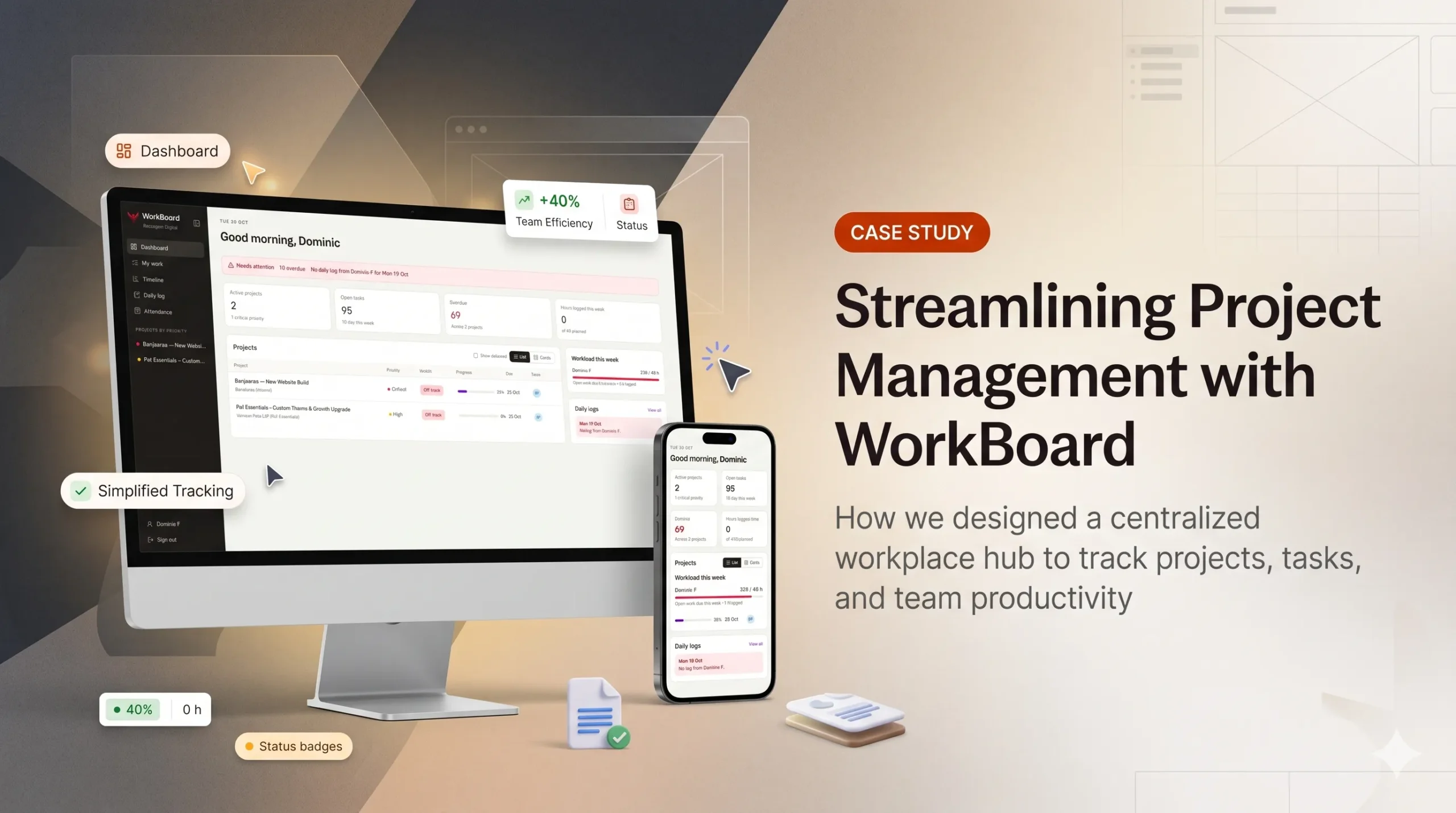
The operations platform we built to run Resurgam, with Claude in the loop.
work.resurgam.digital
Storefront build · Due 24 Oct
On trackSEO · Monthly
At riskBranding · Due 12 Nov
Off trackNew draft from Claude: 4 phases, 23 tasks, 3 milestones, 4 goals
Review and publishOverview
When Resurgam hired its first full-time developer on a hybrid schedule, we needed a clear view of who was doing what, how each project was really going and where time was going. The off-the-shelf tools we tried charged per seat, came padded with features we’d never use, and couldn’t answer the question we cared about most: is this project late, and whose fault is it really?
So we built our own. WorkBoard runs on hosting we already paid for, knows how an agency delivers work, and connects to Claude so planning, monitoring and reporting take minutes. A person still approves everything before the team sees it.
Measurable impact
Measuring now · figures publish after 90 days in use
—Tasks delivered on time
Share of tasks finished by their due date, with client and scope delays excused.
—Time to plan a new project
From brief to a phased plan with tasks, dependencies and milestones. Before vs after.
—Hours a week saved on status updates
Time the founder spent chasing updates over calls and WhatsApp.
—Daily log consistency
Working days with a daily log across the team.
—Time to produce a client report
From request to a branded report built from live project data.
—Yearly subscription cost avoided
Compared with per-seat project tools at our team size.
Challenges and solutions
Seven operational problems shaped the platform and its safeguards.
Per-seat pricing grows with every hire, and the features we’d actually use sat in the higher plans.
A self-hosted platform on the cloud hosting we already run. No per-seat fees, and every project, task and log stays in our own database.
Updates lived in WhatsApp groups, calls and memory. There was no single place to see which projects were slipping.
Every project has phases, milestones and tasks with dependencies, in table, Kanban and timeline views. Health is calculated, not guessed.
A task that’s late because the client didn’t send content looks the same as one that’s late because it was underestimated.
When a task finishes late, WorkBoard asks why. Client, teammate and scope-change delays do not count against the owner.
With two work-from-home days a week, we needed a record of the work without micromanaging.
Done, next and blockers are linked to real tasks, with an activity feed across every project.
Turning a client brief into phases, tasks, estimates and dependencies was slow, and the method lived in one person’s head.
A Model Context Protocol connector lets Claude read the portfolio, draft project plans and goals, and build reports from live numbers.
An assistant that could change live work, or that the whole team could reach, would be a risk.
Claude can read and draft, but it cannot publish. Only an admin can connect it, and every plan waits for human approval.
Weekly updates meant pulling numbers from several places and formatting them by hand.
Claude writes the narrative and WorkBoard prints a branded PDF from current delivery data.
How Claude fits in
05 — 10Human in the loop
Claude prepares the work from live project context. WorkBoard holds it as a draft until a person decides to publish.
Scope, deadline and constraints, in plain language.
Phases, tasks, estimates, dependencies, milestones and goals.
Checked for missing links and dependency loops. The team can’t see it yet.
Edits anything, then publishes in one action.
Owners are assigned and dates go live on the timeline.
Claude prepares; a person decides.
The same pattern covers project goals and client reports.Process
Features, screens and tech stack agreed before any code was written.
Projects, tasks, dependencies, timeline, daily logs, dashboards, team performance and Google sign-in.
Drafts with approval, project goals, templates, the report builder and a secure connector.
Role-based access, retainers, sales pipeline, scope approvals, Google Workspace, n8n and an iPhone app.
Under the hood
A lean TypeScript stack, chosen to run reliably next to live client websites on shared cloud hosting. It uses little memory and shows a clear diagnostic page instead of crashing.
Work with us
We design and build internal platforms around how your team really works, with AI where it saves time and people where judgment matters.
Start a conversation