
Storefronts decay. Nobody budgets for it.

The launch goes well. The new store looks sharp, loads fast, converts better than the old one. Everyone moves on to the next campaign.
Around month seven, conversion starts to slide. Not dramatically: a tenth of a point here, a slower page there. Nobody changed anything major. That's exactly the problem.
A storefront isn't a building you finish. It's closer to a shelf in a busy shop: stock moves, customers change, the aisle gets rearranged around you. Leave it alone and it doesn't stay the same. It falls behind.
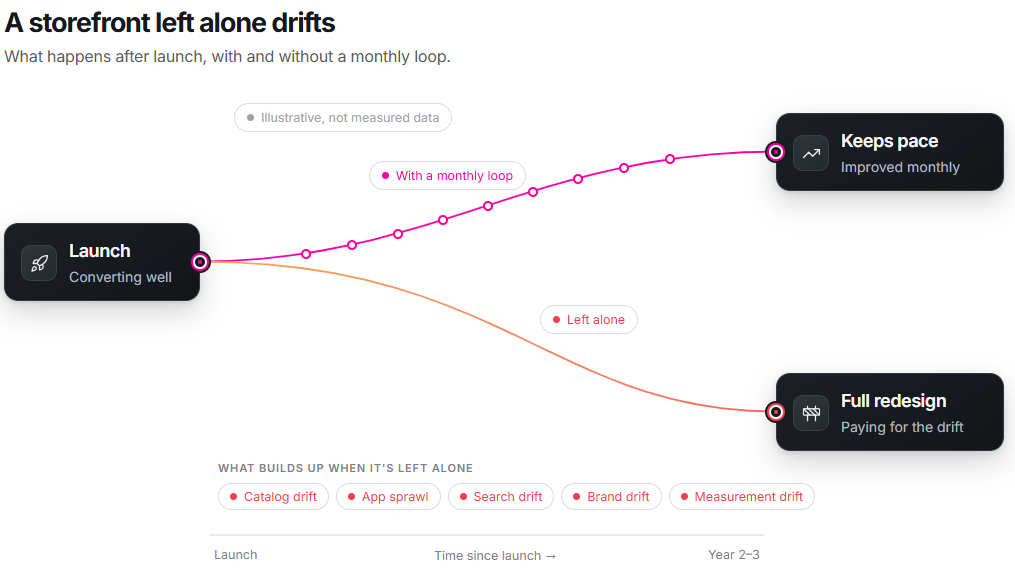
The six forces of decay
- Catalog drift. New products get uploaded by whoever has time. Descriptions get shorter, attributes get skipped, discontinued variants linger. Within a year, the catalog your store was designed around no longer exists.
- App and script sprawl. A review widget for one launch. A popup for one sale. A second analytics tag because the first one looked wrong. Each is small. Together they slow pages, clash with each other and quietly break things.
- Search behaviour drift. The way people find products has changed faster than most stores have. On its Q2 2026 earnings call, Shopify said AI-driven traffic and orders to its merchants had each tripled year on year. A store launched eighteen months ago wasn't built for that reader, the one that asks a question and expects a precise answer.
- Platform drift. Platforms ship changes whether you're watching or not. In March 2026, Shopify began switching on Agentic Storefronts for every store by default. Whether that helps you depends on catalog data and settings nobody on your team may have looked at since launch.
- Brand drift. Sale banners, off-system campaign graphics, a new font in one section because it "felt right". The design system that made the store feel premium wears away one exception at a time.
- Measurement drift. A theme update removes a tracking event. A checkout change breaks attribution. The dashboard still shows numbers; they're just wrong. Every decision after that is made on bad data.
Why no one budgets for it
Most brands fund a storefront the way they'd fund a renovation: one approved budget, one launch date, done. After that, the store has no owner. Marketing owns campaigns. The founder owns growth. Operations owns fulfilment. The store itself belongs to everyone, so it's improved by no one.
The agency model doesn't help. Most agencies are paid to launch, so launches are what get sold. Maintenance sounds like a support contract, and support contracts sound like cost.
The result is predictable. Decay compounds for two or three years, until the store feels old enough to justify a full redesign. That redesign is usually the bill for all the maintenance that was skipped.
Signs your store is already decaying
- Conversion on your top product pages is down, but traffic is steady.
- Nobody can say how many apps are installed, or why.
- Your newest products have thinner pages than your oldest ones.
- Ad-platform and analytics numbers disagree by more than they used to.
- Assistants describe your products using outdated details, or not at all.
- The last change to your homepage was a banner.
Two or more of these, and the decline has started.
What a monthly loop looks like
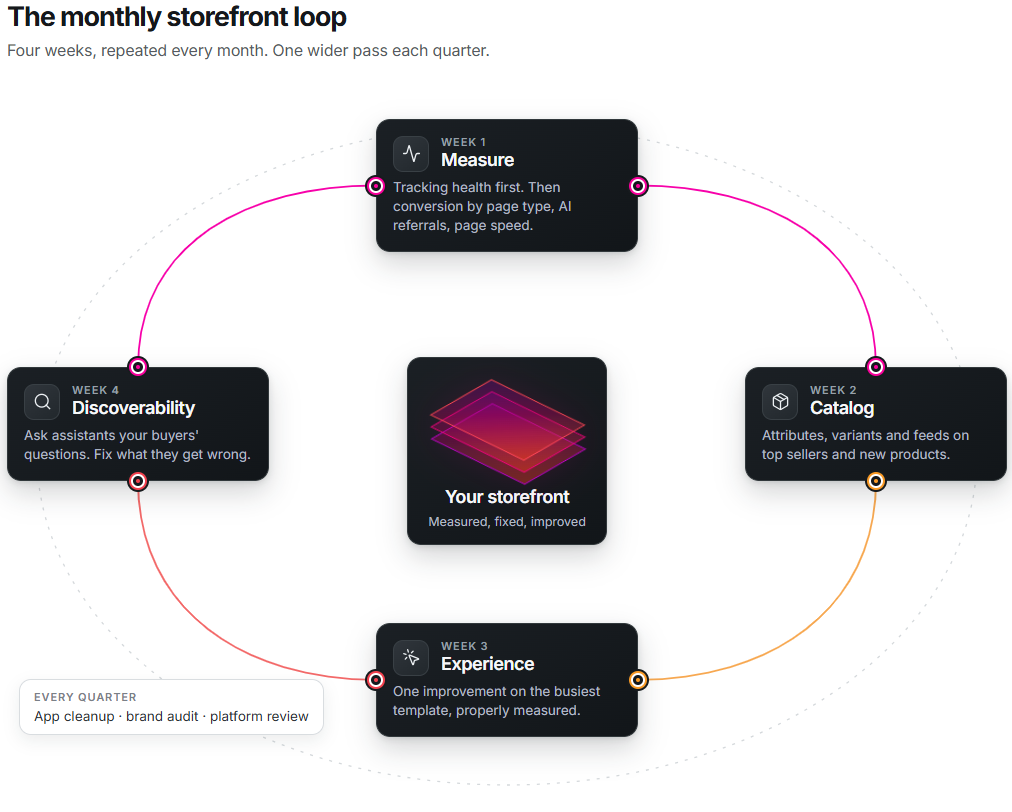
The fix isn't a bigger launch. It's a small, steady loop that runs every month and gets measured like any other growth spend.
- Week 1, measure. Check tracking health first. Then conversion by page type, AI-referred traffic as its own channel, and page speed on your highest-traffic templates.
- Week 2, catalog. Fix attributes, descriptions and variants on the products that sell most and the ones added most recently. Make sure feeds match the site.
- Week 3, experience. Ship one meaningful improvement or test on the template with the most traffic. One, properly measured, beats five guesses.
- Week 4, discoverability. Ask assistants the ten questions your buyers ask. Note where you appear and what they get wrong. Update content, FAQs and structured data to close the gaps.
Once a quarter, add a wider pass: remove apps that aren't earning their place, re-audit the brand system, and review what the platform has shipped since last time.
How to think about the budget
Treat storefront upkeep the way you treat ad spend, not the way you treat IT support. It's monthly. It has a clear output. It gets judged on whether it moves conversion and discoverability, and cut if it doesn't.
The best time to set that budget is before launch, as part of the same plan. The second-best time is the month you notice the slide.
Where we come in
Our Commerce Intelligence work runs this loop for D2C brands after launch, measuring, fixing and improving the storefront every month so it keeps pace with how people, and the agents they use, now shop. Talk to us →
Sources
- TechCrunch, Aug 2026: Shopify says AI search is driving more traffic and sales
- Ask Phill, Apr 2026: Shopify agentic commerce guide